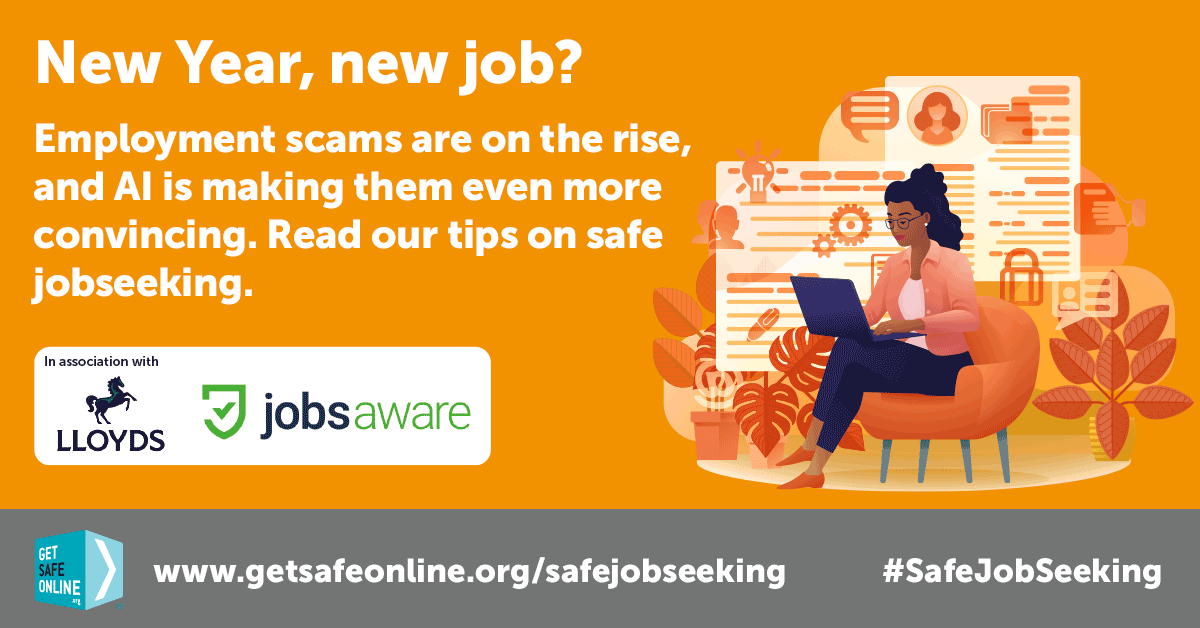
According to recent figures released by Lloyds Banking Group, there has been a 237% increase in 'advanced fee' employment scams since the start of the year.
53% of these scams begin on social media, where criminals post bogus job advertisements or contact victims directly.
The average loss per victim is £1,420, with 7% having lost over £5,000 in the previous six months.
There have been several reported cases where scammers ask jobseekers to sign up to a website or app. Once signed up, they’re told they can earn money by completing simple tasks such as watching a video.
However, after completing a few tasks they are asked to pay a fee to upgrade their account. On top of this, any ‘earnings’ they have made will not be released.
Get Safe Online has collaborated with Lloyds Banking Group and JobsAware – which provides help and advice on scams, mistreatment and unfair working practices – to launch a new Jobseekers’ anti-scam tool centre. It features seven free tools to help protect you from fraud and other online harms when searching for a job.
Access the centre here.
How to avoid
- Legitimate employers/agencies will not ask you to make an upfront payment or deposit to secure work.
- Genuine recruiters don't usually send unsolicited job offers via text message or WhatsApp.
- Be suspicious if you are contacted out of the blue and offered a job that requires no experience, can be done from anywhere and promises large returns for little effort.
Avoid clicking on links in unexpected messages and don't provide your personal details, employment history or bank details unless you have verified that the sender is a genuine recruiter.
Verify that the employer/recruiter you are speaking with is legitimate by contacting them using a phone number or email address listed on their official website or social media accounts. Check official records on websites such as Companies House to confirm that the organisation offering you the job actually exists.
Don't include personal information such as your address, date of birth or NI number on your CV or public profiles on a recruitment sites.
Never accept a job without a formal interview. If the interview is carried out remotely, it should be conducted via a recognised video platform where you can see the interviewer and talk in real time.
If you believe you are at risk of identity fraud, or if your personal details have been stolen, you can apply to use Cifas’ Protective Registration service as an additional way to try to prevent fraud taking place in your name. Find out more: https://www.cifas.org.uk/pr
Find out more
- Safe Jobseeker Centre: https://www.getsafeonline.org/safejobseekertools/
- Get Safe Online article: https://www.getsafeonline.org/personal/news-item/9953/
- Jobs Aware website: www.jobsaware.co.uk/jobseeking-advice
- Advice from Which? on avoiding recruitment scams: www.which.co.uk/consumer-rights/advice/job-scams
- ScamShare Spotlight PDF on Recruitment Scams: www.tsscot.co.uk/Spotlight-Recruitment.pdf
- Cifas Protection Register: https://www.cifas.org.uk/pr